Call:400-882-3320
WeChat
Official Community

Modern Observability and Monitoring Platform
Get StartedPrivate Cloud Deployment Supported
The Importance of Observability
Observability helps us gain a deeper understanding of system operations, diagnose and resolve issues, and improve the quality of software engineering. At the same time, it enables businesses to leverage real data for better insights into their operations, providing valuable support during digital transformation and ensuring technology truly serves business objectives.
Observability Helps Us Achieve the Following Goals

Digitally Driven Productivity
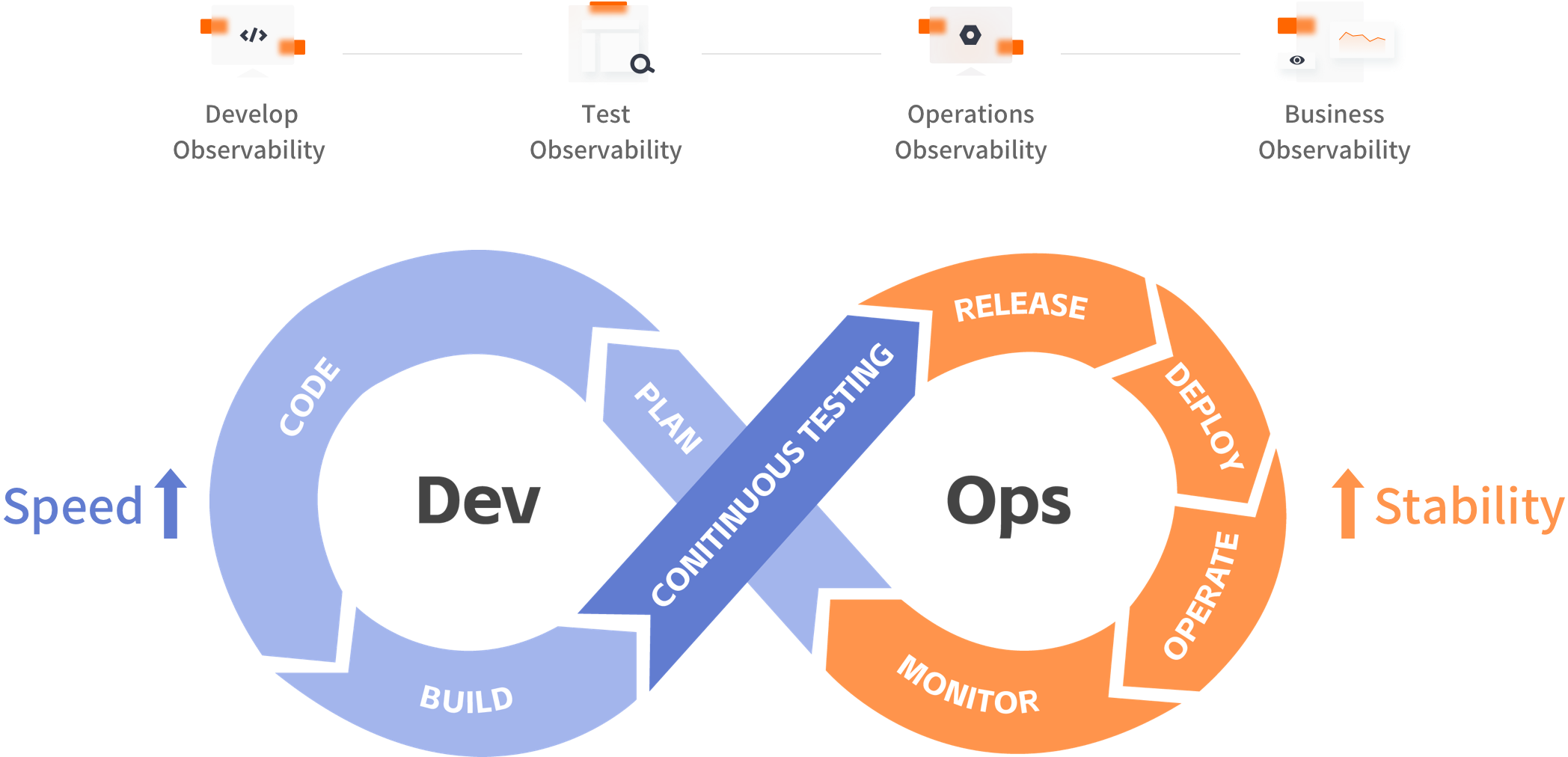
In digital transformation, observability is not just a technical challenge but also a cultural one. It requires fostering a team mindset where everyone collectively focuses on system performance and responds to issues promptly. Observability serves as a data platform connecting development, testing, and operations, ensuring consistency in using data to describe both the development process and production environment. This alignment enhances product and service quality while driving business growth.

Enhancing Software Engineering Quality
During the software development process, applications often encounter performance issues, exceptions, and errors. Observability enables real-time monitoring of application status and behavior, allowing developers to quickly identify and resolve these issues.

Improving System Reliability and Maintainability
Observability helps us better understand system operations and performance, enabling faster and more accurate identification of performance and capacity issues.

Quickly Diagnose Issues and Pinpoint Root Causes
Observability unifies and correlates metrics, logs, traces, frontend user data, and even business-level insights to provide complete context for issues and incidents. This enables faster root cause identification and reduces downtime during incident recovery.
Who Needs an Observability Platform?
Observability is not just about data collection—— it addresses the critical need for consistent, data-driven management across development, testing, staging, and production environments. It empowers the entire DevOps team, including developers, testers, and operations, to effectively monitor, optimize, and enhance applications, ultimately delivering a better user experience.
Developers
When developers are building a system, observability helps them better understand the internal state and behavior of the system. This improves development efficiency, optimizes code, and enhances performance.
Testers
Observability helps testers monitor system performance more easily. When issues arise, they can use observability data for tracing and analysis, avoiding manual recording or reproduction. This enables efficient collaboration with developers, reducing issue resolution time.
Operations & SRE
In a production environment, observability helps operations personnel to comprehensively monitor the system’s operation, understand the system’s performance and bottlenecks, and ensure system reliability based on data rather than relying solely on experience.
Business Personnel
Observability enables the collection of real user behavior data from applications, which not only helps in resolving system issues and integrating business data warehouses but also effectively derives various business insights, allowing enterprises to better understand their business using real data.